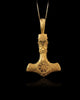
Saint Michael Pendant: The Sacred Symbolism Behind the World’s Most Powerful Protective Talisman
Few symbols in human history carry the weight — spiritual, cultural, and artistic — of Saint Michael the Archangel. For millennia, warriors, kings, and those who sought divine protection have turned to this celestial defender. Today, the finest expression of that devotion lives not on a cathedral wall, but around the neck — cast in 18k or 22k gold, hand-finished by master artisans, and worn by those who understand that true luxury is never merely decorative.
This is not a piece you buy on impulse. A Saint Michael pendant at this level is a considered acquisition — one that carries meaning across generations and appreciates in value alongside its spiritual significance. If you are here, you already know the difference.
Who Is Saint Michael the Archangel?
Saint Michael — Mikha’el in Hebrew, meaning “Who is like God?” — is the supreme commander of Heaven’s armies in Christian, Jewish, and Islamic theology. He is the only angel explicitly given the title of Archangel across all three Abrahamic faiths, a distinction that has made him one of the most universally venerated figures in religious history.
His roles are layered and profound:
- Celestial Warrior: Saint Michael led the angelic forces that cast Satan out of Heaven — an act of divine warfare immortalized in art from Raphael to William Blake.
- Protector of Souls: In Catholic tradition, he escorts souls safely to Heaven and guards them against evil at the moment of death.
- Weigher of Souls: In the Last Judgment tradition, Michael holds the scales of justice — making him a symbol of divine balance, truth, and righteousness.
- Patron Saint: He is the patron of soldiers, police officers, paramedics, doctors, and all who face danger in service to others.
- Healer: Early Christian and Byzantine traditions credited Saint Michael with miraculous healings at sacred springs and shrines across the Mediterranean.
This is a figure who spans the theological spectrum — equally revered in Rome, Jerusalem, Constantinople, and Mecca. That universality is one reason the Saint Michael pendant has endured not as religious kitsch, but as a profound symbol that transcends denomination.
The Iconography: What Every Element Means
When you commission or purchase a fine Saint Michael pendant, every visual element carries centuries of theological and artistic intention. Understanding the iconography is what separates a collector from a casual buyer.
The Wings
Michael’s wings are not decorative. They represent swiftness of divine action — the capacity to move between the celestial and earthly realms instantaneously. In Byzantine iconography, the wings are often spread wide and rendered in elaborate feather detail, symbolizing the fullness of divine power. In Renaissance depictions, they take on a naturalistic grandeur influenced by Roman military eagles. A pendant that captures this detail in three-dimensional relief demonstrates the hand of a true master goldsmith.
The Sword or Spear
Saint Michael is almost always depicted with a drawn sword or flaming lance — the instrument of divine justice used to defeat Lucifer. This weapon is not a symbol of aggression; it is the symbol of righteous authority. In fine jewelry, the sword is often rendered with extraordinary detail — damascened, flame-tipped, or set with gemstones to indicate its divine origin. For the wearer, it represents the courage to stand for truth against overwhelming opposition.
The Dragon or Fallen Angel Underfoot
Perhaps the most powerful compositional element: Michael with one foot planted firmly on the defeated serpent or fallen Lucifer. This image — drawn directly from the Book of Revelation 12:7–9 — is a meditation on the triumph of light over darkness, good over evil, divine order over chaos. In a high-quality pendant, this figure beneath Michael’s heel is sculpted with the same care as the saint himself, because the contrast between the two is the entire theological statement.
The Armor
Saint Michael is almost always depicted in the armor of a Roman general — a deliberate choice by early Christian artists to signal that the Church’s spiritual warfare was as real and structured as earthly military conflict. The breastplate, greaves, and helmet are often rendered with astonishing detail in the finest pendants, each plate etched with cross motifs or sacred inscriptions. The armor also connects the pendant to the classical world — to Rome, to Greece, to the long arc of Western civilization that Michael embodies as its guardian.
The Shield and Inscription
Many representations show Michael bearing a shield inscribed with the phrase “Quis ut Deus” — Latin for “Who is like God?” — the literal translation of his Hebrew name. This is simultaneously his battle cry and his identity: a question, not a boast. The most discerning collectors seek pendants where this inscription is hand-engraved with period-appropriate letterforms, a mark of both scholarship and craft.
A History Written in Gold: Saint Michael Through the Ages
The tradition of wearing Saint Michael as a personal talisman is ancient. Byzantine emperors wore gold medallions bearing his image into battle. Crusader knights commissioned Michael pendants as votive offerings before departing for the Holy Land. The Knights of Saint Michael — one of the oldest chivalric orders in France, founded in 1469 by Louis XI — wore his image as the central emblem of their collar chain, one of the most elaborate and expensive pieces of jewelry ever produced in the medieval world.
During the Renaissance, the finest goldsmiths of Florence, Venice, and Antwerp competed to produce Michael pendants for the nobility and high clergy. Benvenuto Cellini — perhaps history’s greatest goldsmith — wrote extensively about commissions involving armored angel figures in the tradition of Saint Michael. These pieces were investments of the highest order: expressions of faith, power, and aesthetic sophistication that also functioned as portable wealth.
This tradition continues. A fine Saint Michael pendant today occupies the same cultural and financial space that it did in the 15th century: it is a statement of who you are, what you believe, and what you value — expressed in the most enduring material known to civilization.
Why the Saint Michael Pendant Endures: A Psychological and Spiritual Perspective
The resurgence of interest in Saint Michael jewelry among collectors and high-net-worth individuals is not accidental. Several forces converge to make this particular piece more relevant today than at any point in the modern era.
Protection as a Primal Need
In an era of global uncertainty, the impulse toward protective symbols is deeply human. The Saint Michael pendant serves this need on multiple levels — as a spiritual invocation of divine protection, as a psychological anchor that grounds the wearer in something larger than themselves, and as a tangible reminder of personal values and commitments.
Cross-Cultural Resonance
Unlike many religious symbols that carry denominational weight, Saint Michael speaks across boundaries. He is revered by Catholics, Eastern Orthodox Christians, Protestants, Muslims, and Jews alike. This universality makes the pendant wearable — and meaningful — to a broader audience than almost any other religious icon.
The Masculine Archetype
Saint Michael represents a specific and timeless masculine ideal: strength in service of righteousness, courage without cruelty, authority tempered by divine accountability. For men who wear jewelry with intention — who understand that what is placed on the body is a statement about the self — Michael resonates at a level that purely aesthetic pieces cannot reach.
Heirloom Quality and Legacy
A masterfully crafted Saint Michael pendant in 18k or 22k gold is not purchased for one lifetime. It is an object that gains meaning through transmission — from father to son, from patron to protégé, from one generation of believers to the next. This is jewelry as biography, as family history, as spiritual inheritance. The investment calculus is therefore different from fashion jewelry: you are not buying for today, but for a century from now.
What to Look for in a Fine Saint Michael Pendant
If you are considering an investment at this level, these are the benchmarks that separate exceptional work from merely good work:
Metal Quality and Karat
The standard for serious investment pieces is 18k gold (75% pure gold, alloyed for durability) or higher. Some collectors prefer 22k for its rich, warm color and higher intrinsic value, though this requires greater care. Avoid silver or gold-plated pieces if you are acquiring for heritage — the material must match the intention.
Sculptural Depth and Dimensionality
The finest Saint Michael pendants are works of three-dimensional sculpture, not stamped or cast from a shallow die. Look for pendants where Michael’s figure has genuine relief — where the wings cast shadows, where the armor has depth and texture, where the defeated figure beneath his feet is fully realized rather than implied. This is the work of hands, not machines.
Hand Finishing and Surface Quality
Even a lost-wax cast pendant requires extensive hand-finishing by a skilled goldsmith: chasing, burnishing, engraving, and polishing that brings the piece to life. Look for consistent surface quality across all planes, crisp edge definition on details, and the kind of warm glow that only hand-polished gold achieves. Machine-finished pieces have a different quality — not necessarily lower, but fundamentally different in character.
Iconographic Accuracy
A fine religious pendant should reflect genuine scholarship about its subject. The details — the number of wing feathers, the style of armor appropriate to the iconographic tradition, the correct rendering of the dragon — matter to a discerning collector. Work from makers who clearly understand the history of Saint Michael in art.
Provenance and the Maker’s Hand
At the investment level, the maker matters. A pendant created by a goldsmith with a documented body of work, a recognizable aesthetic, and a personal relationship with their craft carries value that a factory-produced piece never will. The maker’s mark is the pendant’s signature — and like all signatures, it matters whose it is.
Caring for a Fine Saint Michael Pendant
An investment of this magnitude deserves proper stewardship:
- Store in a lined jewelry box or individual soft pouch, away from other pieces that can cause surface abrasion.
- Clean with a soft, untreated cloth and warm water. For deeper cleaning, use a solution of mild dish soap and warm water, rinse thoroughly, and dry immediately.
- Have the piece professionally inspected and polished every few years by a qualified goldsmith — particularly if it features stone settings.
- Avoid exposure to chlorine, harsh chemicals, and ultrasonic cleaners on pieces with fine relief detail, as these can damage delicate surface work.
- Document the piece with high-resolution photography and, where possible, have it appraised and insured at replacement value.
The Saint Michael Pendant at Johnny Saint: Where Devotion Meets Mastery
At Johnny Saint Studio, every Saint Michael pendant begins not with a mold, but with a conversation. Who will wear this piece? What tradition does it need to honor? What legacy is it meant to carry? These questions shape every decision — the weight of the gold, the scale of the figure, the choice between a matte or burnished finish, the inclusion of diamonds or colored stones at key iconographic points.
Our pieces are not mass-produced. Each pendant is individually cast, hand-finished, and personally signed. Lead times reflect the care required. Prices reflect the quality of material and the irreplaceable investment of a master goldsmith’s time. If you are prepared to own an object that will outlast you and carry your story into the next generation, we invite you to begin that conversation.
“Saint Michael is not merely a pendant. He is a statement of what you stand for — rendered in the most enduring language we know.”
Frequently Asked Questions
Is a Saint Michael pendant appropriate for non-Catholics?
Absolutely. Saint Michael is venerated across Christianity, Islam, and Judaism. Many collectors who wear fine Saint Michael pendants do so primarily for their cultural and protective symbolism, rather than specific denominational devotion. The iconography speaks universally.
What is the right size for a statement Saint Michael pendant?
For a piece intended as a primary statement pendant — worn on a heavy chain against the chest — we typically recommend a figure height of 45–65mm. This scale allows the iconographic detail to be fully appreciated while remaining wearable. Smaller pieces (25–40mm) work beautifully for everyday wear or as part of a layered collection.
What chain weight and length complements a Saint Michael pendant?
A pendant of 20–50 grams of gold requires a chain that can bear its weight with dignity. We recommend a solid gold franco, figaro, or curb chain in a gauge of 4–8mm, at a length of 22–26 inches for most men. The chain itself should be considered a second investment — never hang a masterwork pendant from a lightweight chain.
Can a Saint Michael pendant include gemstones?
Yes, and many of our most extraordinary pieces do. White diamonds are used to highlight the sword, wings, or halo. Deep blue sapphires reference the heavenly realm. Rubies have historically been used to mark the blood of spiritual warfare. These additions should always serve the iconography, not compete with it.
How long does a custom Saint Michael pendant take?
For fully custom pieces, expect 8–14 weeks from commission to delivery. This timeline reflects the reality of working in precious metal at this level: design consultation, wax carving or CAD modeling, casting, hand-finishing, stone setting, and final quality inspection. Excellence cannot be rushed.